Spring Lawn Care in Nottinghamshire: Getting Your Grass Ready for Summer
Our practical guide to spring lawn care in Nottinghamshire covers everything Newark and local homeowners need to know to get their grass looking great.

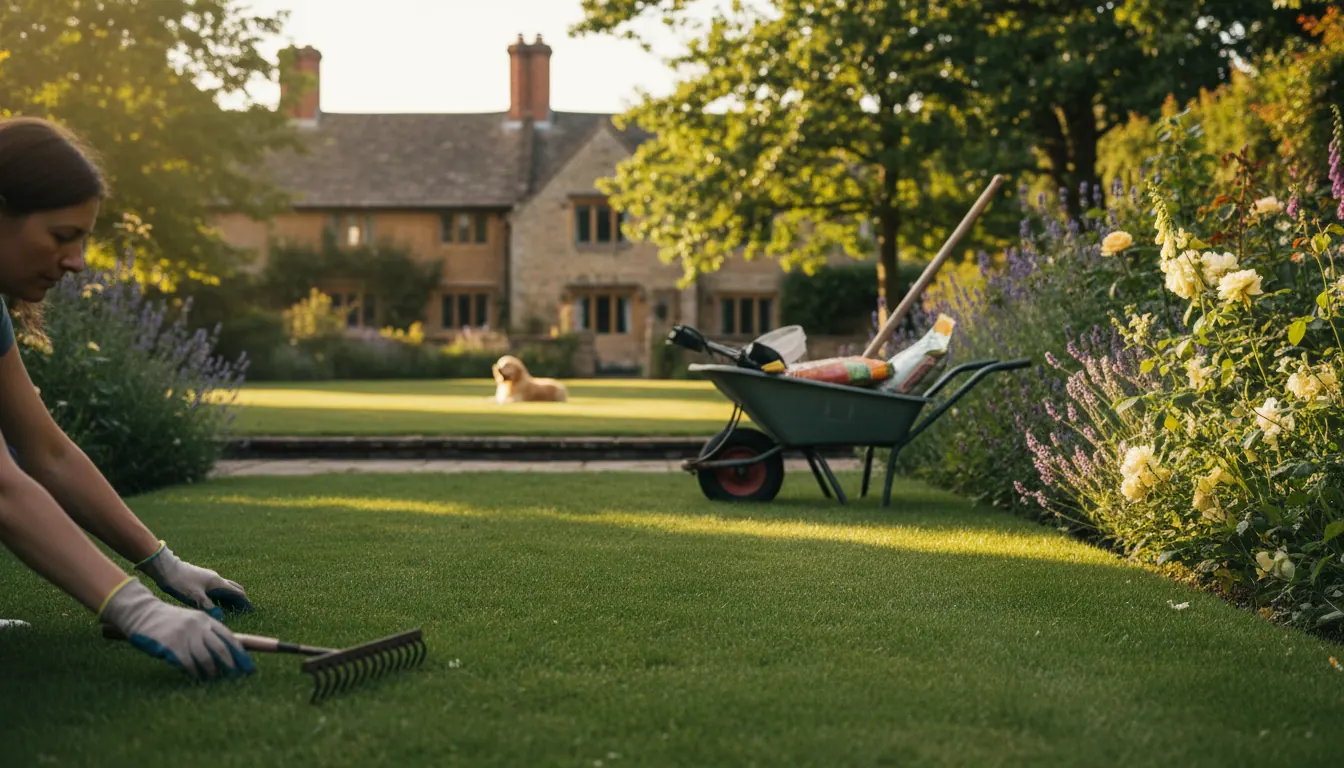
Your Nottinghamshire lawn needs attention the moment the ground warms up
Most lawns across Newark-on-Trent, Balderton, Southwell and the surrounding villages come through winter looking a little sorry for themselves. Compacted soil, moss patches, tired growth and bare spots are completely normal after a wet Nottinghamshire winter. The good news is that spring is genuinely the best time to sort all of it out, and the jobs you do between March and May set the lawn up for the rest of the year.
This guide walks through what to do, in roughly the right order, so nothing gets missed.
Wait for the right conditions before you start
This is the step most people skip, and it causes problems. Working on a lawn when the soil is still waterlogged or frozen does more harm than good. Walk across the grass: if your feet sink in or leave deep impressions, hold off for another week or two.
A useful rule of thumb for Nottinghamshire is to watch the grass itself. When it starts actively growing again and you find yourself thinking about the first cut, that is the signal that conditions are right for the jobs below.
The best spring lawn treatment: start with a feed
The single most effective thing you can do for a tired Nottinghamshire lawn in spring is feed it with a balanced fertiliser designed for the season. Spring lawn feeds are higher in nitrogen than autumn ones, because nitrogen drives the leafy green growth you want at this time of year.
Apply a granular spring fertiliser once the grass is actively growing, typically from mid-March onwards depending on the weather. Avoid feeding during a dry spell without watering it in, or during a frost. Scatter it evenly and water it in if rain is not expected within a day or two.
A good feed makes a visible difference within a couple of weeks. The colour deepens, growth picks up, and the lawn starts to look like itself again.
Scarifying: clearing the thatch that is choking your grass
Thatch is the layer of dead grass, moss and debris that builds up between the soil surface and the green growth. A thin layer is fine. A thick one blocks air, water and nutrients from reaching the roots, and that is when lawns start to thin out and look dull.
Scarifying rakes out that thatch, and spring is a good time to do it because the lawn has the whole growing season ahead to recover. Use a spring-tine rake for a small area, or a mechanical scarifier for anything larger.
A few points worth knowing:
- Scarify when the grass is actively growing, not when it is dormant or stressed.
- Do not scarify a lawn that has just been seeded or is very thin: it needs to establish first.
- Expect the lawn to look a bit rough immediately afterwards. It recovers quickly.
To answer a question we hear regularly: October is not too late to scarify in the UK, but spring is generally the better time because recovery is faster. If you missed it in autumn, do it now.
Aeration: letting the soil breathe again
Clay-heavy soils are common across parts of Nottinghamshire and Lincolnshire, and they compact over winter under foot traffic and rain. Compacted soil drains poorly and struggles to absorb the nutrients you are putting on.
Aeration involves pushing holes into the soil to open it up. A garden fork works for small areas: push it in to a depth of around 10 cm and rock it slightly, repeating every 10–15 cm across the lawn. For larger gardens, a hollow-tine aerator is more efficient.
After aerating, brush a top-dressing of sharp sand or a purpose-made lawn top-dressing mix into the holes. This improves drainage and structure over time, particularly on heavier soils.
How to rejuvenate a Nottinghamshire lawn that is patchy or thin
Bare patches and thin areas are common after winter. The fix is overseeding: spreading grass seed across the affected areas to fill them in. Spring works well for this because soil temperatures are rising and moisture is usually reliable.
Steps to overseed a patchy lawn:
- Rake the bare area lightly to loosen the surface.
- Scatter seed at the recommended rate for the product you are using.
- Rake gently again to work the seed into contact with the soil.
- Water it in and keep it moist until germination, which typically takes one to three weeks depending on temperature.
- Avoid mowing the new growth until it reaches about 5–6 cm.
Overseeding works best when combined with aeration and a light top-dressing, because the seed needs good soil contact to germinate reliably.
Getting the mowing routine right from the start
The first cut of the year should be a high one. Set the mower blades to their highest setting and take off just the top third of the grass. Cutting too low too early stresses the lawn and can scalp it on any uneven ground.
Once the lawn is growing well, you can gradually lower the cut over several weeks. Aim to mow regularly enough that you are never removing more than a third of the blade length in one go. For most Nottinghamshire lawns in spring, that means cutting every seven to ten days.
Keep the blades sharp. Blunt blades tear the grass rather than cutting it cleanly, leaving ragged tips that turn yellow and invite disease.
What our customers say about a well-kept lawn
We take real pride in the finish we leave behind, whether that is a freshly cut lawn, a newly laid patio or a garden that has had a proper spring tidy. Jo, one of our customers, put it simply:
Definitely recommend 100% Cut our grass perfectly
That kind of result comes from taking the time to get the details right: the right cut height, clean edges, and leaving the space looking genuinely tidy. It is what we aim for on every visit across Newark, Fernwood, Coddington, Farndon and beyond.
Do not neglect the edges
Lawn edges along paths, borders and patios make a huge difference to how tidy the whole garden looks. After a winter of growth, edges often become ragged and overgrown.
A half-moon edging iron recuts the edge cleanly at the start of the season. Long-handled edging shears or a powered edger keep them sharp through the year. It takes a fraction of the time the main mowing does, but it elevates the overall look noticeably.
Moss: treating it properly rather than just raking it out
Moss in a Nottinghamshire lawn is almost always a symptom of something else: shade, poor drainage, compaction, low fertility or a combination of these. Raking moss out without addressing the cause means it comes straight back.
Apply a spring lawn treatment containing iron sulphate to kill the moss first. Wait until it has blackened (usually two to three weeks), then scarify it out. After scarifying, overseed any bare patches and feed the lawn. Then look at the underlying cause: if it is drainage, aeration will help. If it is shade, there are shade-tolerant grass seed mixes available.
Linking spring lawn care to the wider garden
A well-kept lawn is often the centrepiece of a garden, but it works best when the rest of the space is in good order too. If you are thinking about adding a patio or decking to complement the lawn this year, our article on Patio vs. Decking: Which Is Right for Your Newark Garden? walks through the key differences to help you decide.
And if you already have a patio that has come through winter looking tired, it is worth reading our guide on Patio Jet Washing: How Often Should You Clean Your Patio in Newark? before the outdoor season properly gets going.
Frequently asked questions about spring lawn care in Nottinghamshire
What is the best lawn treatment for spring? A balanced granular fertiliser with a higher nitrogen content, applied once the grass is actively growing, is the most impactful single treatment. Combine it with aeration and scarifying if the lawn is compacted or mossy, and you will see a significant improvement within a few weeks.
How do I rejuvenate a tired or patchy lawn? Start with scarifying to remove thatch, then aerate to loosen the soil, overseed any bare patches, and apply a spring feed. Keep the lawn watered during dry spells while the new seed establishes. Most Nottinghamshire lawns respond well to this process when it is done in March or April.
Is October too late to scarify a lawn in the UK? Not too late, but spring is generally better. Scarifying in autumn is fine if the lawn is still growing and you do it before the end of October, but the recovery window is shorter. If you missed autumn, spring is the right time to do it: the lawn has the whole season ahead to fill back in.
What should I do with my lawn during a Nottinghamshire winter? Mostly, leave it alone. Avoid walking on it when it is frozen or waterlogged, keep it clear of leaves (which block light and encourage disease), and do not mow it when it is not actively growing. The work comes in spring, once the soil warms up.
Ready to get your garden sorted this spring?
If you would rather hand the grass cutting or garden maintenance over to someone who will get the finish right, we cover Newark-on-Trent, Southwell, Collingham, Balderton, Sutton-on-Trent and all the surrounding areas across Nottinghamshire and Lincolnshire. Send us a few photos through our quote form or give us a call on 07940 769083 and we will take it from there. Get in touch with us here and let us know what your garden needs.